HyljBeMF35O
Uncategorized

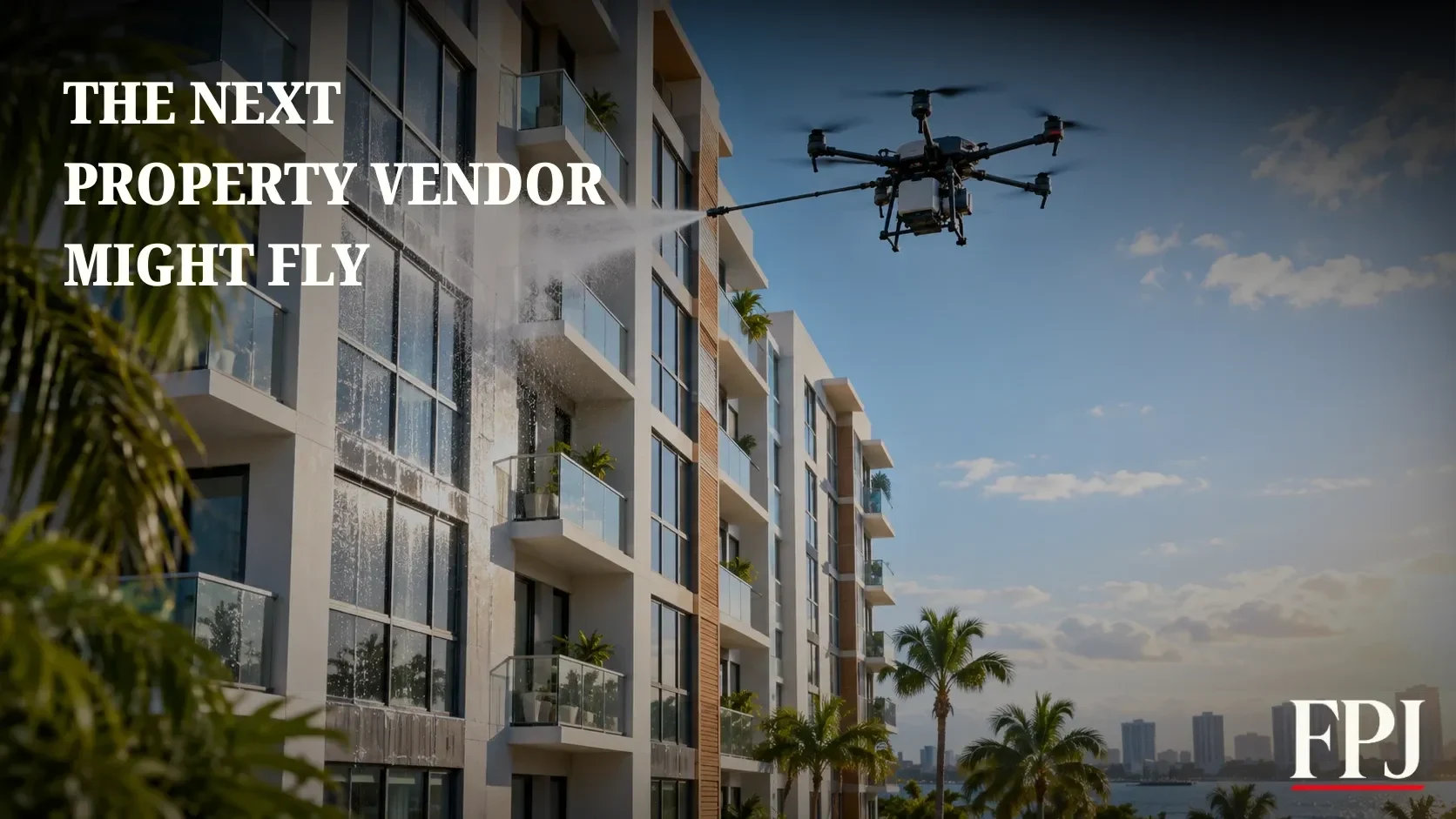
The Next Property Vendor Might Fly: How Drone Building Cleaning Is Changing Exterior Maintenance in Southwest Florida

Summit Drone Solutions Feature: We’re proud to have been featured in coverage highlighting how drone building cleaning is changing exterior maintenance across Florida and beyond.

Original Reporting Credit: This article was originally published by Florida Property Journal as a feature on drone building cleaning, and Florida Property Journal featured Summit Drone Solutions in its reporting. Credit to Florida Property Journal as the original source of the reporting and interviews.

Technology & Innovation

Drones Are Coming for Traditional Property Services

Cleaning drones are beginning to change how buildings are washed — and Florida property managers are starting to encounter them in actual bids.

For decades, cleaning the exterior of a multi-story building has required some combination of ladders, boom lifts, scaffolding, ropes and workers operating high above the ground.

A growing group of contractors is beginning to approach the same job differently.

They are sending up drones.

Purpose-built cleaning drones can now pressure wash, soft wash and clean exterior windows while much of the crew remains on the ground. The technology is still relatively new, but adoption has expanded far enough that some property managers are beginning to specifically request drone-based cleaning when work goes out to bid.

For multifamily operators, the potential impact extends beyond having a new piece of equipment on-site. Drones could change how certain exterior-maintenance contracts are staffed, priced and completed.

Charlotte-based robotics company Lucid Bots has become one of the companies driving that transition.

From camera drones to building maintenance
Founded in 2018, Lucid Bots manufactures the Sherpa, a commercial cleaning drone designed for exterior building maintenance.

The system can be configured for window cleaning, soft washing and pressure washing, allowing contractors to clean surfaces such as glass, stucco, EIFS, brick and concrete without positioning a worker directly against the building.

Lucid says more than 400 commercial cleaning operators across more than 40 states now use its technology. The company raised a $20 million Series B earlier this year, bringing total funding to $34 million as it expands manufacturing and its broader robotics platform.

But the strongest use case is not necessarily the tallest building.

Lucid founder and CEO Andrew Ashur told Florida Property Journal that some of the most compelling economics can be found in the type of mid-rise properties common throughout multifamily.

“Wherever you’re going to have the hardest and most difficult headaches to clean traditionally, that’s where the Sherpa is going to give you the best ROI.”
Ashur pointed to a six- or eight-story apartment community stretching several hundred feet horizontally as an especially attractive example.

Traditional crews may need to repeatedly reposition an aerial lift or descend from the roof and move to another section of the building. In some cases, Ashur said crews can spend more time setting up access than actually cleaning.

A drone changes that equation because it can move both vertically and laterally without repeatedly relocating heavy access equipment.

Lucid currently markets Sherpa for exterior cleaning up to roughly 150 feet, making mid-rise buildings a more natural target than skyscrapers.

Where the savings come from
The economic case, according to Ashur, generally falls into three categories: labor, equipment and insurance-related costs.

The first is time.

Ashur said Lucid customers typically expect to complete drone-assisted jobs at least twice as efficiently as traditional methods, with some jobs reaching substantially larger improvements.

“A bad day for them is if they’re not at least twice as efficient.”
He said Lucid has seen certain projects completed as much as eight times faster, although results vary significantly depending on the building and cleaning method.

Less time on-site can translate into fewer labor hours.

The second category is access equipment. Ashur pointed to large boom lifts as an example, noting that renting a 120-foot lift for an extended project can cost more than $10,000 per month.

Avoiding that equipment while also shortening the job can allow the savings to compound.

The third consideration is risk.

Cleaning workers operating on lifts, ropes or other elevated systems create a fundamentally different risk profile than employees working from the ground. Sherpa still requires an operator — this is not a completely autonomous replacement for a cleaning crew — but the worker does not need to occupy the same elevated position as the drone.

For Ashur, that distinction is central to Lucid’s pitch.

“We’re not replacing people. We’re really enabling and empowering them to do more work and do it more safely.”
Property managers are starting to ask for drones
Perhaps the strongest indication that the technology is moving beyond novelty is coming from the buyers themselves.

Ashur said that over roughly the past year and a half, Lucid has increasingly seen requests for proposals that specifically call for drone cleaning, rather than simply asking contractors to submit a general exterior-cleaning bid.

That suggests at least some owners and property managers are becoming familiar enough with the technology to request it directly.

Cost is only part of the reason.

Exterior work can create considerable disruption at an occupied apartment community. Lifts may take up parking spaces or drive aisles, equipment can remain around the property for days or weeks, and contractors need to coordinate their work around residents and building access.

Completing the same scope in less time can reduce that disruption.

Ashur said property managers ultimately want clean buildings that remain attractive to residents, while spending as little time and money as necessary on the process itself.

For multifamily, that creates an interesting proposition: if exterior maintenance can be completed faster and with less equipment occupying the property, owners can potentially reduce both cost and inconvenience to residents.

Florida is already becoming a meaningful market
The technology is not theoretical in Florida.

During his interview with Florida Property Journal, Ashur reviewed Lucid’s customer map and estimated the company now has close to 50 operators in Florida.

That figure was an approximate count rather than a formal company total, but it provides a sense of how quickly the network has spread across the state.

“We have dozens of customers in Florida at this point, and they’re cleaning pretty much every structure you can imagine.”
Lucid itself does not perform the cleaning work. Its model is to provide the technology, software, training and support infrastructure to cleaning companies that then sell and perform the services locally.

That distinction could prove important for the broader property-services industry.

Rather than Lucid replacing existing contractors, its technology can give those contractors another method of performing work — while also lowering the barrier for a new generation of operators to build businesses around robotic cleaning.

Florida presents some particularly relevant conditions.

Ashur noted the state’s humidity and the resulting buildup of algae and mold on exterior surfaces. Those conditions create recurring demand for soft washing in addition to conventional window cleaning.

The Sherpa is also liquid-agnostic, meaning contractors can use their own compatible cleaning products rather than being limited exclusively to a Lucid-branded chemical.

What drone cleaning looks like on the ground in Southwest Florida
For Nick Burgess, founder of Summit Drone Solutions, drone cleaning was not an add-on to an established pressure-washing business.

It was the reason the company existed in the first place.

Burgess told Florida Property Journal that he entered the exterior-cleaning industry without a traditional pressure-washing background after seeing drone technology used for facade and window cleaning several years ago. Summit recently marked its third year in business and now serves Southwest Florida, with Burgess estimating that roughly 60% to 70% of its work is commercial. On the residential side, the company increasingly focuses on community-scale projects or larger homes where the size of the property makes drone deployment more practical.

“The drone really, at the end of the day, is a tool in the toolbox,” Burgess said. “It’s not going to be for every single project.”

For multifamily and commercial properties, Summit generally sells the same three advantages Lucid emphasizes: safety, efficiency and, in some cases, lower cost.

But Burgess added an important Florida-specific qualification.

Southwest Florida’s exterior-cleaning market is highly competitive, meaning drone cleaning does not automatically produce a dramatically cheaper bid on every project. In many cases, Summit’s pricing can be relatively close to conventional cleaning competitors.

When that happens, Burgess said the value proposition shifts toward reducing disruption and completing the work more efficiently.

Traditional access equipment can require roadways, entrances or sections of a property to be blocked while crews reposition lifts or other equipment. A drone can often reduce the amount of time those areas are affected.

That distinction matters for occupied apartment communities, hotels and commercial properties where exterior maintenance has to happen without unnecessarily interfering with the people using the building.

Florida also gives operators something many northern markets do not: a year-round cleaning season.

That creates opportunities for recurring maintenance contracts, although Burgess said it also contributes to aggressive competition among cleaning companies. Florida’s humidity creates another recurring source of demand, as commercial and residential properties continually deal with mold, mildew and other organic buildup on exterior surfaces.

Drones still have limits
Cleaning drones are not about to make every traditional exterior-maintenance method obsolete.

Height remains one of the clearest limitations.

Ashur said the Sherpa’s strongest applications today are generally on mid-rise and lower high-rise buildings, typically under 20 stories. Burgess, speaking from the operator side, said Summit’s preferred range is even narrower.

“Our sweet spot that I like to see is between eight and 10 stories,” Burgess said.

At those heights, he said the company can maintain useful flight time while still completing a meaningful amount of work.

Battery life has historically been one of the practical limitations.

Without Lucid’s new ground-powered tether, Burgess said Summit may get roughly 15 minutes of flight time while working around eight to 10 stories. The company typically brings 14 to 16 batteries and two quick chargers to larger jobs, cycling batteries continuously to keep the drone operating.

Summit has already placed a deposit on Lucid’s Power Tether, which is designed to supply continuous electricity from the ground and reduce the need for those battery swaps.

Height is not the only consideration.

Burgess said evaluating whether a property is suitable for drone cleaning begins with the condition of the building and the surrounding site.

Windows that have been heavily neglected may require manual scrubbing or restoration before they can return to a normal maintenance schedule. Trees positioned close to a facade, neighboring buildings and other physical obstacles can also restrict where a drone can safely operate.

“Managing expectations is such a big part of our business,” Burgess said.

In those situations, Summit may combine drone cleaning with more traditional methods rather than forcing the technology into a job where it does not fit.

That reinforces one of the most important points emerging from both interviews:

The drone is not necessarily replacing exterior cleaning. It is changing how crews access the surfaces that need to be cleaned.

For properties where access is the most difficult, expensive or disruptive part of the job, that distinction can materially change how the work is performed.

The next property-services workforce may look different
One of the more unexpected effects of the technology may involve labor itself.

Ashur said traditional cleaning contractors have generally viewed Sherpa less as a threat to their jobs and more as another tool that expands what crews can safely and efficiently accomplish.

A window cleaner who once spent much of the workday operating from ropes or lifts can increasingly become a drone operator or robotics technician. Ashur said that shift can also help with recruiting and retention in an industry where physically demanding work has historically made staffing difficult.

Summit Drone Solutions offers another example of how that transition may play out.

Burgess originally built Summit specifically around drone cleaning, but customers eventually pushed the company toward a broader exterior-cleaning model. Property owners did not necessarily want one contractor for the drone-accessible portions of a building and another for everything else, so Summit added more conventional services and developed into a more complete exterior-cleaning provider.

That evolution suggests robotics may not replace traditional property-service companies so much as change what those companies look like.

The future operator may use a drone for the portions of a building where access is difficult, conventional equipment where direct contact is necessary, and eventually ground-based robotics for other parts of the job.

Burgess believes greater automation will continue pushing the industry in that direction.

For property-service companies, that could mean a workforce that increasingly combines traditional trade skills with drone operation, robotics and technology management.

The jobs will remain.

The tools — and the skills required to use them — may look very different.

From frontier technology to normal equipment
Lucid is already preparing for the next stage of that transition.

The company recently introduced its Power Tether, which supplies continuous electricity to the Sherpa from the ground and reduces the need for repeated battery changes during longer jobs. Lucid says the system has been tested through more than eight hours of continuous flight.

For operators such as Summit Drone Solutions, that addresses one of the technology’s most practical limitations.

Burgess said Summit currently brings as many as 14 to 16 batteries and two quick chargers to larger projects, continuously rotating batteries as the drone works. At the eight- to 10-story range, he said flight time can fall to roughly 15 minutes before another battery change is required.

Summit has already placed a deposit on a Power Tether, which Burgess described as a potential “game changer” for longer-duration work, particularly on taller buildings.

That evolution illustrates how quickly the technology is moving from proof of concept toward ordinary operating equipment.

Ashur believes the direction is relatively straightforward.

“Robotic-based methods to maintain the building will become the norm versus the frontier application.”
His argument is not that today’s technology can already perform every property-maintenance task. Rather, it is that systems already capable of doing useful work today are likely to become substantially more capable over the next several years.

Burgess has watched that transition begin from the operator side.

When Summit began marketing drone cleaning three years ago, he said property managers and HOA representatives often struggled to understand the concept.

“They looked at me like it was from another planet,” Burgess said. “They couldn’t wrap their head around, ‘You’re going to clean with a drone?’”
Today, he said that reaction is increasingly rare. Even customers who have never hired a drone-cleaning company have often heard of the technology, and more local operators have begun adding drones to their own businesses.

For property owners and managers, that could gradually change how exterior-maintenance bids are evaluated. Price and scope will remain important, but so will the method used to complete the work, the amount of equipment required on-site, the disruption created for residents or tenants and the number of workers who need to operate at height.

Florida property professionals can see it in person
Lucid is scheduled to hold a hands-on Sherpa demonstration in Miami on October 21, giving property owners, managers and service contractors an opportunity to see the technology operate in person.

Ashur encouraged Florida property professionals interested in drone cleaning to attend or connect with Lucid, which can refer owners and managers to operators serving their respective markets.

That matters because both Ashur and Burgess described essentially the same challenge: drone cleaning can be difficult to fully appreciate until someone sees it working on an actual building.

For an industry that has relied on lifts, scaffolding, ropes and other high-access methods for decades, adoption is unlikely to happen everywhere at once.

Traditional cleaning methods will remain necessary for extremely tall buildings, restoration work, difficult sites and surfaces that require direct physical contact. Drone cleaning is not eliminating those methods.

But it is beginning to create another option.

For the right property, that can mean less equipment on-site, fewer workers operating at height, shorter project timelines and a different approach to how exterior maintenance is planned.

Three years ago, Burgess said he often had to convince customers that cleaning a building with a drone was even possible.

Today, nearly 50 Lucid operators are estimated to be active across Florida, property managers are beginning to encounter drone-specific requests and bids, and new operators continue entering the market.

The technology is still early.

But the question is beginning to change from whether drones can clean buildings to where they make the most sense to use.

And if Ashur’s prediction is right, five years from now the unusual part may not be seeing a drone clean an apartment building.

It may be seeing one cleaned without one

Request Your Complimentary Quote Today!

If your commercial, multifamily or large residential property in Southwest Florida could benefit from efficient exterior cleaning with less disruption, we’re ready to help.

Summit Drone Solutions provides professional drone-powered exterior cleaning throughout Southwest Florida. Contact us today for a complimentary quote.

REQUEST YOUR COMPLIMENTARY QUOTE TODAY!

Call (239) 842-0619 or email Info@Summitdrones.com. We answer inquiries within 24 hours and proudly serve customers across Southwest Florida.

Contact Summit Drone Solutions for your complimentary quote.

vKSHZeFKxBd
Uncategorized

How Often Should You Soft Wash Your Home or Business in Florida?

Summit Drone Solutions drone actively soft washing the exterior of a large commercial building

Florida properties face year-round exposure to heat, humidity, heavy rain, salt air, algae, mold, mildew, dirt, and airborne pollutants. That combination can make exterior surfaces look stained or neglected sooner than they would in a cooler, drier climate.

For most Florida properties, a professional exterior soft wash every 12 to 18 months is a practical starting point. Roofs often benefit from soft washing every one to two years, while coastal, shaded, or heavily landscaped properties may need service every six to twelve months.

Your ideal schedule depends on the surface, location, exposure, and current condition of your property. This guide explains how often to schedule soft washing for your home or business in Southwest Florida.

Florida Soft Washing Frequency At A Glance

Use these timeframes as a general maintenance guide:

  • Home exterior walls: Every 12–18 months
  • Coastal or heavily shaded walls: Every 6–12 months
  • Florida roofs: Every 1–2 years
  • Shaded or algae-prone roofs: Every 6–12 months
  • Commercial building exteriors: Annually or semiannually
  • High-visibility commercial areas: Quarterly or as needed
  • Windows: Twice yearly for many homes; quarterly for high-traffic businesses
  • Hard-to-reach areas: During the regular exterior cleaning visit or whenever buildup becomes visible

These are useful benchmarks, not rigid rules. If algae, mold, mildew, or staining returns sooner, schedule service sooner.

Why Florida Properties Need Regular Soft Washing

Florida’s climate creates ideal conditions for organic growth. Warm temperatures allow algae and mildew to remain active for much of the year. High humidity keeps shaded surfaces damp, while frequent rain spreads dirt and contaminants across walls, roofs, walkways, and other exterior areas.

Coastal properties also experience salt air and windblown debris. Properties near lakes, retention ponds, canals, or dense landscaping may stay damp longer than open, sunny properties.

Regular soft washing helps remove:

  • Algae and green film
  • Mold and mildew
  • Black roof streaks
  • Dirt and grime
  • Cobwebs and insect residue
  • Salt and atmospheric pollutants
  • Organic staining around windows, soffits, and overhangs

Unlike high-pressure cleaning, soft washing uses low-pressure water and specialized cleaning solutions selected for the surface. This helps clean delicate materials more carefully while targeting the contaminants causing the staining.

Learn more about Summit Drone Solutions’ exterior drone washing services.

How Often Should You Soft Wash Your Home?

Most Florida homeowners should consider a complete exterior soft wash every 12 to 18 months. This schedule works well for homes with average sun exposure, limited tree cover, and no persistent algae or mildew problems.

You may need service every six to twelve months if your home is:

  • Near the coast
  • Surrounded by trees
  • Heavily shaded
  • Near a lake, canal, or retention pond
  • Exposed to frequent irrigation overspray
  • Located in a humid, poorly ventilated area
  • Showing algae or mildew shortly after cleaning

House soft washing in Florida commonly includes stucco, siding, painted surfaces, soffits, fascia, exterior walls, and other areas where dirt and organic growth collect.

A recurring schedule keeps buildup from becoming severe. It also helps maintain curb appeal and reduces the need for more intensive cleaning later.

Stucco, Siding, and Exterior Walls

Stucco is widely used throughout Florida, but its porous texture can hold moisture and collect algae, mildew, and airborne dirt. Vinyl siding, painted walls, masonry, and EIFS can also develop staining in damp or shaded areas.

For most properties:

  • Open, sunny properties: Every 15–24 months
  • Typical inland properties: Every 12–18 months
  • Coastal or shaded properties: Every 6–12 months
  • Commercial façades: Usually annually or semiannually

A professional assessment is important because every surface has different cleaning requirements. The appropriate pressure, solution, dwell time, and rinsing process should be selected based on the material and its condition.

How Often Should You Soft Wash a Florida Roof?

Most Florida roofs should be professionally soft washed every one to two years. Some roofs remain clean longer in full sun with minimal tree cover, while shaded or coastal roofs may need annual or semiannual attention.

Schedule a roof cleaning sooner if you notice:

  • Black streaks on shingles
  • Green or brown organic growth
  • Dark patches beneath trees
  • Moss or lichen
  • Heavy dirt along roof valleys
  • Staining around vents or roof penetrations

Soft washing is preferred for many shingle, tile, metal, and flat roofing systems because high pressure can damage roofing materials. Drone roof cleaning can also reduce the need for workers to climb ladders or walk across the roof.

Summit Drone Solutions uses drone-assisted soft-washing techniques to clean elevated roof areas without traditional roof access in suitable conditions. Visit our drone roof cleaning service page to learn more.

Windows and Glass Surfaces

Windows collect salt, dust, pollen, rain residue, and mineral deposits. Homes may benefit from window cleaning once or twice a year, while commercial properties often need quarterly or semiannual service depending on visibility and foot traffic.

You may want to schedule window cleaning more frequently for:

  • Storefronts
  • Office buildings
  • Restaurants
  • Medical facilities
  • Hotels and condominiums
  • Properties near the coast
  • Buildings exposed to irrigation or construction dust

Summit Drone Solutions offers elevated window washing using specialized glass-cleaning solutions and deionized water for a spot-free final rinse. This can be especially useful when windows are difficult to reach with ladders or lifts.

Commercial Building Soft Wash Frequency

Commercial properties generally benefit from a more consistent cleaning schedule because appearance affects customers, tenants, employees, and visitors.

A practical commercial schedule may include:

  • Annual exterior soft washing for standard properties
  • Semiannual cleaning for coastal, shaded, or high-traffic properties
  • Quarterly cleaning for entrances, storefronts, and highly visible areas
  • Post-storm cleaning after major weather events
  • Pre-sale, pre-lease, or inspection cleaning when presentation matters

Commercial buildings often include large façades, multi-story walls, loading areas, roof sections, windows, and architectural features that are difficult to access using conventional methods.

Drone exterior cleaning allows Summit Drone Solutions to reach many elevated and hard-to-reach areas from the ground. Our systems are designed for suitable multi-story residential, commercial, and industrial projects, with cleaning capability of up to 15 stories and nearly 300 square feet per minute depending on site conditions.

Learn more about our drone cleaning services.

When Should You Schedule Soft Washing?

Southwest Florida properties can be cleaned throughout the year when weather and site conditions are suitable. However, many property owners prefer to schedule service during the cooler, drier months from late fall through spring.

This timing can help you:

  • Refresh your property before seasonal guests arrive
  • Prepare a business for increased tourist traffic
  • Remove buildup before the rainy season
  • Improve curb appeal before selling or leasing
  • Address exterior staining after summer humidity
  • Complete maintenance before community inspections

Do not wait for a specific season if you already see visible growth. Algae, mold, mildew, and staining are signs that your property may need attention now.

Signs It Is Time to Schedule Service

Your property may be ready for soft washing if you notice:

  • Green, gray, or black staining
  • Black streaks on the roof
  • Mildew around windows or doors
  • Dirty or discolored stucco
  • Cobwebs beneath rooflines
  • Grime around soffits and fascia
  • Salt residue on coastal surfaces
  • Uneven staining between shaded and sunny areas
  • A visibly dull or neglected appearance

Regular inspections from the ground can help you identify problem areas before they become more noticeable or difficult to clean.

Why Choose Drone-Powered Soft Washing?

Drone soft washing provides practical advantages for residential and commercial properties with elevated or difficult-to-reach surfaces.

Benefits include:

  • Reduced need for ladders, lifts, and scaffolding
  • Less disruption around the property
  • Efficient cleaning of large exterior areas
  • Improved access to high building sections
  • Low-pressure cleaning for many delicate surfaces
  • Reduced exposure to fall-related access hazards
  • Convenient service for commercial properties that remain open
  • Eco-friendly cleaning solutions selected for the project

Drone technology does not replace careful planning. Weather, wind, airspace, building design, surrounding structures, and surface condition all matter. Summit Drone Solutions evaluates the property and recommends an appropriate scope of work.

Create a Recurring Exterior Cleaning Plan

A recurring maintenance plan makes exterior property cleaning easier to manage. Instead of waiting for heavy buildup, you can schedule service around your property’s needs and operating calendar.

A plan may include:

  • Annual home exterior soft washing
  • Annual or semiannual roof cleaning
  • Commercial building soft wash service
  • Window washing
  • High-area and hard-to-reach cleaning
  • Post-storm cleaning
  • Pre-sale or pre-lease property refreshes

A regular plan also helps you budget for maintenance and keep your property looking clean throughout the year.

Request Your Complimentary Quote Today

The right soft-washing schedule depends on your property’s surface materials, location, shade, coastal exposure, and cleaning history. Summit Drone Solutions provides professional drone-powered exterior cleaning for homes, businesses, commercial buildings, roofs, windows, and other elevated areas throughout Southwest Florida.

We serve homeowners, landlords, property managers, facility managers, commercial property owners, and businesses.

Request a complimentary quote today.

Call (239) 842-0619 or email Info@Summitdrones.com. We respond to inquiries within 24 hours.

CONTACT SUMMIT DRONE SOLUTIONS TODAY FOR YOUR COMPLIMENTARY SOFT-WASHING QUOTE!

Exterior-drone-washing
Uncategorized

Looking for Commercial Building Soft Wash in Southwest Florida? Here Are 10 Things Facility Managers Should Know

Commercial building soft washing is a practical way to refresh your property, protect exterior surfaces, and maintain a professional appearance without creating unnecessary disruption for tenants, customers, or employees.

In Southwest Florida, heat, humidity, rain, salt air, and organic growth can quickly affect commercial exteriors. Dirt, grime, algae, mold, mildew, cobwebs, and stains can collect on roofs and walls, making a well-maintained building look neglected.

Drone-powered soft washing gives facility managers a modern alternative for cleaning elevated and difficult-to-reach areas. Before you schedule a service, here are 10 important things to know.

1. Understand What Commercial Soft Washing Includes

Soft washing combines low-pressure water with specialized cleaning solutions. Instead of relying on force alone, the process targets the organic contaminants and buildup affecting the surface.

This approach is often appropriate for commercial exterior materials such as:

  • Stucco and painted surfaces
  • Concrete and masonry
  • Metal panels
  • Tile, shingle, and flat roofing systems
  • Building façades
  • Loading areas and exterior structures
  • Windows and other elevated surfaces

The correct cleaning method depends on the material, condition, height, surrounding landscape, and type of buildup. A qualified provider should assess the property before recommending a scope of work.

Learn more about Summit Drone Solutions’ exterior drone washing services.

2. Southwest Florida’s Climate Requires Consistent Maintenance

Commercial properties in Southwest Florida face year-round exposure to moisture and intense sunlight. Shaded walls, roof sections, covered walkways, and areas near landscaping can stay damp longer, creating favorable conditions for algae, mold, and mildew.

A one-time cleaning can produce a noticeable improvement, but recurring maintenance helps prevent heavy buildup from returning. A clean exterior is easier to maintain than a surface that has been neglected for several years.

Your maintenance schedule may depend on:

  • Building location
  • Nearby trees and vegetation
  • Shade and moisture levels
  • Surface type and color
  • Customer visibility
  • Previous cleaning history
  • Seasonal business demands

Many commercial properties benefit from annual or semiannual exterior cleaning. High-visibility locations may require more frequent service.

3. Drone Building Cleaning Improves Access

Large commercial buildings often include areas that are difficult to reach with ladders, lifts, scaffolding, or traditional hoses. These access challenges can increase setup time, restrict parking, and make a routine cleaning project more disruptive.

Drone building cleaning helps crews reach elevated surfaces from the ground. Summit Drone Solutions states that its drone systems can wash multi-story residential, commercial, and industrial spaces up to 15 stories high, depending on site conditions and project requirements.

This makes drone-assisted cleaning particularly useful for:

  • Churches and worship facilities
  • Hotels and hospitality properties
  • High-rise condominiums
  • Office buildings
  • Hospitals and healthcare facilities
  • Stadiums and event venues
  • Industrial buildings
  • Retail and commercial centers

A site evaluation is still essential. Building height, surrounding structures, airspace, wind, access, and surface condition all affect the best approach.

Aerial view of a large tiled roof and surrounding landscaped property in Florida

4. Safety Should Be a Primary Selection Factor

Facility managers are responsible for protecting occupants, visitors, vendors, and property. Exterior cleaning at height introduces additional considerations, including fall hazards, equipment placement, pedestrian movement, and overhead obstructions.

Drone-powered cleaning can reduce the need for workers to climb ladders, walk on roofs, or operate from elevated platforms. That can reduce exposure to fall-related hazards and help limit the equipment needed at the job site.

However, drone cleaning still requires careful planning. Ask a provider how it manages:

  • Flight paths and exclusion zones
  • Pedestrian and vehicle movement
  • Nearby power lines and structures
  • Wind and weather conditions
  • Overspray and surrounding property
  • Emergency procedures
  • Communication with onsite management

Commercial drone operations in the United States must also follow applicable Federal Aviation Administration requirements. The FAA explains that commercial operators of small drones generally operate under Part 107 rules, including requirements related to remote pilot certification, aircraft registration, airspace, and operating limitations. Review the FAA’s commercial drone operator guidance when evaluating a provider.

5. Minimal Disruption Is a Major Advantage

Traditional exterior cleaning may require lifts, scaffolding, hoses across walkways, parking restrictions, or extended setup and teardown. For an active commercial property, these interruptions can affect customers and daily operations.

Drone soft washing can reduce the amount of equipment occupying the property and may allow work to move more efficiently across large or elevated surfaces. Summit Drone Solutions reports that its systems can clean up to nearly 300 square feet per minute, although actual production depends on the building, surface, buildup, weather, and project scope.

Before work begins, coordinate with your cleaning provider about:

  • Tenant and employee access
  • Customer entrances
  • Parking areas
  • Delivery schedules
  • Business hours
  • Outdoor seating or event areas
  • Landscaping and irrigation
  • Work zones and communication procedures

Off-hours, early-morning, or weekend scheduling may be appropriate for retail, hospitality, medical, and high-traffic properties.

6. The Cleaning Method Should Match the Surface

Not every commercial exterior should be treated the same way. High pressure may damage delicate finishes, force water behind building materials, affect sealants, or disturb roofing components.

A professional soft-washing plan should account for the surface and its condition. Facility managers should ask:

  • What pressure will be used?
  • Which cleaning solution is appropriate?
  • How will windows, doors, vents, and equipment be protected?
  • Will the process affect landscaping?
  • Are there manufacturer or warranty requirements?
  • How will heavily stained areas be treated?

Summit Drone Solutions uses low-pressure spraying and specialized cleaning solutions for exterior washing. Its drone cleaning services page notes that soft washing is preferred for many exterior surfaces where high-pressure applications could cause damage.

7. Roof Cleaning Can Be Part of the Scope

Commercial roof cleaning is often overlooked because much of the roof is not visible from the ground. However, algae, dirt, mold, mildew, and other organic compounds can affect the appearance and maintenance needs of roofing systems.

Drone-assisted roof cleaning allows crews to treat elevated areas without requiring workers to walk across the roof. Summit Drone Solutions provides drone roof cleaning for common Florida roofing types, including shingle, tile, metal, and flat roofing systems.

Roof cleaning should not replace a professional roof inspection. If you notice damaged tiles, loose flashing, standing water, leaks, or other concerns, arrange an inspection with the appropriate roofing professional.

For more information, visit the commercial drone roof cleaning service page.

Drone-assisted view of a commercial-style tiled roof surrounded by palm trees and landscaped grounds

8. Environmental Planning Matters

Commercial cleaning projects should be planned with care around landscaping, storm drains, waterways, neighboring properties, and building occupants.

Ask your provider how it manages:

  • Cleaning solution selection
  • Overspray control
  • Rinsing procedures
  • Storm drains and drainage paths
  • Landscaping protection
  • Wastewater and runoff
  • Weather-related rescheduling

The right procedures depend on the property, local requirements, cleaning method, and site conditions. The Environmental Protection Agency explains that stormwater can transport pollutants into storm sewer systems and nearby waters, which is why responsible site planning and pollution controls matter. Read the EPA’s stormwater guidance for additional background.

Eco-friendly soft-washing techniques can help remove contaminants effectively while minimizing unnecessary pressure and water use. Your provider should explain the products and procedures included in the quote.

9. A Detailed Quote Prevents Surprises

Commercial cleaning estimates should be based on the actual property rather than a simple square-footage assumption. A clear quote helps you compare providers and plan your budget accurately.

Request a written scope that identifies:

  • Buildings and elevations included
  • Roofs or exterior surfaces included
  • Approximate project schedule
  • Cleaning methods
  • Access requirements
  • Surface protections
  • Runoff and landscaping procedures
  • Additional services or exclusions
  • Total price and payment terms

Share any building plans, prior cleaning records, tenant requirements, or access restrictions before the estimate. The more information your provider has, the more useful and accurate the proposal can be.

Summit Drone Solutions offers complimentary quotes for commercial and residential exterior cleaning projects throughout Southwest Florida.

10. Recurring Service Protects Appearance and Budget Control

A recurring maintenance plan makes exterior cleaning easier to manage. Instead of waiting until stains become severe or a property is preparing for an inspection, you can schedule service around your operating calendar.

A maintenance plan may include:

  • Annual building washing
  • Semiannual roof cleaning
  • Quarterly high-visibility area cleaning
  • Window washing
  • Solar panel washing
  • Post-storm exterior cleaning
  • Pre-sale or pre-lease property refreshes

Recurring service helps keep your property looking professional throughout the year and makes expenses more predictable. It also gives your cleaning provider a better understanding of the building, its surfaces, access points, and recurring problem areas.

Choose a Commercial Cleaning Partner That Understands Your Property

The best commercial building soft wash provider should offer more than equipment. You need a responsive partner that understands safety, scheduling, surface care, environmental responsibility, and the practical demands of an active facility.

Summit Drone Solutions provides drone-powered exterior cleaning for commercial properties throughout Southwest Florida. Our technology helps us reach high and difficult areas efficiently while minimizing disruption and reducing the need for traditional elevated access methods.

We serve property owners, facility managers, businesses, landlords, and property management companies. Contact us today for a complimentary quote. All inquiries are answered within 24 hours, and immediate assistance is available at (239) 842-0619.

REQUEST YOUR COMPLIMENTARY COMMERCIAL CLEANING QUOTE TODAY!

Commercial building exterior being cleaned by a Summit Drone Solutions drone using a low-pressure soft-washing system

featured-image-78d0f621
Uncategorized

How to Choose the Best Drone Soft Washing Service in Southwest Florida (Compared)

Choosing an exterior cleaning company is easier when you know what to compare. The right provider should deliver more than a clean surface. You want dependable service, careful property protection, efficient results, and a process that works for Southwest Florida’s challenging coastal climate.

Drone soft washing offers a modern alternative to traditional ladders, lifts, scaffolding, and high-pressure cleaning. By combining specialized cleaning solutions with precise drone technology, qualified professionals can reach elevated and difficult areas while keeping workers safely on the ground.

If you are comparing drone soft washing services in Naples, Fort Myers, Cape Coral, or elsewhere in Southwest Florida, use the following checklist to make a confident decision.

Start With True Soft Washing Capability

The first question to ask is simple: Does the company provide genuine soft washing, or is it only using a drone to deliver high-pressure water?

Soft washing uses carefully selected cleaning solutions and controlled pressure to remove contaminants such as:

  • Dirt and grime
  • Mold and mildew
  • Algae
  • Cobwebs
  • Environmental stains
  • Coastal salt and buildup

This approach is especially useful for surfaces that may be damaged by excessive water pressure, including roof materials, stucco, painted siding, and certain exterior coatings.

A reputable provider should explain how it determines the right solution and application method for each surface. The process should be customized for the property rather than applying the same pressure and cleaning mixture everywhere.

At Summit Drone Solutions, our drone-powered soft washing service is designed to clean residential and commercial exteriors with precision while minimizing disturbance to the property.

Compare Safety Practices And Access Methods

Safety is one of the most important reasons property owners consider drone cleaning.

Traditional exterior cleaning may require ladders, lifts, scaffolding, or workers walking across elevated surfaces. These access methods can add setup time, restrict areas of the property, and increase exposure to fall-related hazards.

Drone-assisted cleaning allows the team to address many elevated areas from the ground. That means less reliance on ladders and scaffolding, fewer access complications, and reduced disruption around your home or business.

When comparing providers, ask:

  • Do workers need to walk on the roof?
  • Will a lift or scaffold be required?
  • How does the company manage flight areas and surrounding property?
  • Are preflight inspections completed?
  • How are weather and airspace conditions monitored?
  • Does the provider carry appropriate insurance?

You should receive clear, direct answers. A professional company will be prepared to explain its safety procedures before work begins.

Summit Drone Solutions conducts preflight checks and monitors conditions before each mission. Our team also uses ground-based soft washing equipment when it is the best option for lower sections of a property. The goal is not to use a drone unnecessarily. The goal is to select the safest and most efficient approach for the work.

Look For Experience With Southwest Florida Properties

Southwest Florida properties face year-round exposure to heat, humidity, rain, wind, and coastal air. These conditions can contribute to faster buildup on roofs, stucco, siding, walls, windows, and other exterior surfaces.

The best provider for your property should understand the local environment and the materials commonly used in the area. Look for experience with:

  • Shingle roofs
  • Tile roofs
  • Metal roofs
  • Flat roofing systems
  • Stucco exteriors
  • Commercial facades
  • Multi-story buildings
  • Difficult-to-reach architectural features

Ask to see examples of comparable projects. A company that cleans homes should be able to discuss residential roof and exterior maintenance. A commercial provider should understand how to work around tenants, customers, parking areas, landscaping, and business hours.

Summit Drone Solutions serves residential and commercial customers throughout Southwest Florida. Our drone roof cleaning service is designed for common Florida roofing systems, including shingle, tile, metal, and flat roofs.

Evaluate Efficiency And Property Disruption

A cleaning method can be effective and still create unnecessary inconvenience. Traditional access equipment may occupy parking spaces, block walkways, restrict entry points, or interrupt normal business operations.

Drone soft washing can simplify the process for many high or hard-to-reach areas. There is less equipment to position around the building, and crews can often begin work without installing extensive access systems.

Ask each company:

  • How long will the project take?
  • What areas of the property will be restricted?
  • Will parking or customer access be affected?
  • Does the company clean during flexible hours?
  • How much setup equipment is required?
  • Can the company clean difficult areas without a lift?

Summit Drone Solutions reports cleaning speeds of up to nearly 300 square feet per minute, depending on the property and conditions. Faster application can help reduce the time your home or business is affected by cleaning activity.

Efficiency may also improve project value. Every property is different, so your quote should account for building height, size, accessibility, surface condition, and the level of contamination. A professional estimate is more useful than a generic price based only on square footage.

Ask About Cleaning Solutions And Environmental Care

Cleaning solutions are an important part of soft washing. The provider should explain what products are used, why they are appropriate for your surfaces, and how the team protects surrounding landscaping and property features.

Useful questions include:

  • Are the cleaning solutions biodegradable?
  • How are plants and landscaping protected?
  • How is overspray managed?
  • Are windows, vehicles, pools, and outdoor furniture covered or protected?
  • Will the solution be adjusted for the material being cleaned?

At Summit Drone Solutions, cleaning products are selected based on the job. Our process can include soft-wash solutions and surfactants for roofs and siding, along with deionized water and a specialized concentrate for window cleaning.

Responsible exterior cleaning is not only about removing visible stains. It is also about maintaining the property carefully and reducing avoidable impact on surrounding areas.

Compare Drone Soft Washing With Traditional Pressure Washing

Both drone soft washing and traditional pressure washing have appropriate uses. The right choice depends on the surface, height, contamination, and desired result.

Consideration Drone Soft Washing Traditional Pressure Washing
Elevated areas Reaches many high surfaces from the ground May require ladders, lifts, or scaffolding
Cleaning method Uses controlled pressure and specialized solutions Relies primarily on water pressure
Roof cleaning Designed for careful roof maintenance Can be unsuitable when pressure is excessive
Site disruption Often requires less access equipment May involve hoses, lifts, or larger setups
Worker access Keeps workers on the ground for drone-assisted areas May require elevated work or roof access
Best applications Roofs, facades, stucco, siding, and hard-to-reach areas Durable hardscapes and other suitable surfaces

Traditional pressure washing can be useful for durable surfaces such as some concrete areas. However, high pressure is not automatically the best choice for every exterior material.

A qualified service provider should recommend the method that fits your property rather than treating every project as a pressure-washing job.

Review The Quote Before You Hire

A clear quote helps you compare providers accurately. Avoid estimates that do not explain what is included.

Your written quote should identify:

  • Areas and surfaces to be cleaned
  • Soft washing, pressure washing, or both
  • Cleaning solutions included
  • Expected project timeline
  • Preparation and protection steps
  • Any access or equipment requirements
  • Total price and payment terms
  • Recommended maintenance schedule

The lowest quote is not always the best value. A provider with better safety practices, more precise surface care, stronger communication, and a more efficient process may deliver a better overall result.

At Summit Drone Solutions, we provide complimentary quotes and respond to inquiries within 24 hours. Contact our team to discuss your property and receive a practical recommendation.

Choose A Provider That Communicates Clearly

Responsive customer service is a meaningful part of the cleaning experience. You should not have to chase a company for basic information about timing, scope, preparation, or pricing.

Before hiring, pay attention to whether the provider:

  • Answers your questions directly
  • Explains the process in plain language
  • Arrives prepared and professionally equipped
  • Provides a clear scope of work
  • Offers realistic scheduling information
  • Follows up after the estimate
  • Makes it easy to request service

These details often reveal how carefully the company will manage the job itself.

Why Southwest Florida Property Owners Choose Summit Drone Solutions

Summit Drone Solutions provides efficient, eco-conscious exterior cleaning for homes, businesses, and commercial properties throughout Southwest Florida.

Our drone-powered approach helps you clean high and difficult-to-reach areas with:

  • Reduced reliance on ladders and scaffolding
  • Minimal disruption at the job site
  • Precise soft washing
  • Ground-based crew operations for elevated cleaning
  • Faster service for many property types
  • Professional care for roofs and building exteriors
  • Complimentary quotes
  • Responsive communication within 24 hours

Whether you need residential roof cleaning, commercial building washing, or maintenance for a challenging exterior, our team can help you identify the right cleaning method.

Request Your Complimentary Quote Today

The best drone soft washing service should combine modern equipment with careful surface knowledge, strong safety practices, local experience, and dependable communication.

Do not choose based on equipment alone. Compare the company’s process, cleaning methods, property protection plan, experience, and written quote. Then select the provider that gives you confidence from the first conversation.

CONTACT SUMMIT DRONE SOLUTIONS TODAY for a complimentary quote. Call (239) 842-0619, email Info@Summitdrones.com, or send us your project details online.

error: Content is protected !!